Case Study • Civic Tech / Media Literacy • Mobile App •

Facts

A UX research-led tool that helps people pause, verify, and think before they share, turning the fight against misinformation into an everyday habit.

Microsoft Design Challenge 2022 · Shortlisted, Top 16

RoleUX Research & Design
Timeline2022
DomainCivic Tech · Trust & Safety
TypeMobile App
01 Project Brief

What is Facts?

Facts is a mobile app that helps everyday readers slow down and check what they’re about to share. Instead of policing speech, it builds one simple habit: pause, verify, decide. Misinformation then loses its single biggest advantage, speed.

The goal: make fact-checking feel effortless and non-judgemental, so it fits naturally into the few seconds before someone taps “share”.

  • UX research
  • User interviews
  • Surveys
  • Competitive audit
  • Wireframing
  • High-fidelity design
  • Usability testing
02 The Challenge

Why misinformation wins

Misinformation spreads faster than the truth because sharing is frictionless and emotional. By the time a correction arrives, the false claim has already travelled, and been believed.

  • Speed beats accuracy. A claim is reshared in seconds, long before anyone checks it.
  • Emotion drives sharing. Outrage and fear travel further than nuance.
  • No moment to pause. Nothing prompts people to question a post before they tap share.
  • Fact-checks feel like lectures. Corrections arrive late and come across as preachy.
  • Trust is fragmented. People genuinely don’t know which sources to believe.
03 Research

Understanding how it spreads

I combined secondary research on how misinformation travels with primary work, interviews and a survey, to understand when, why, and how people share before they verify.

Secondary research
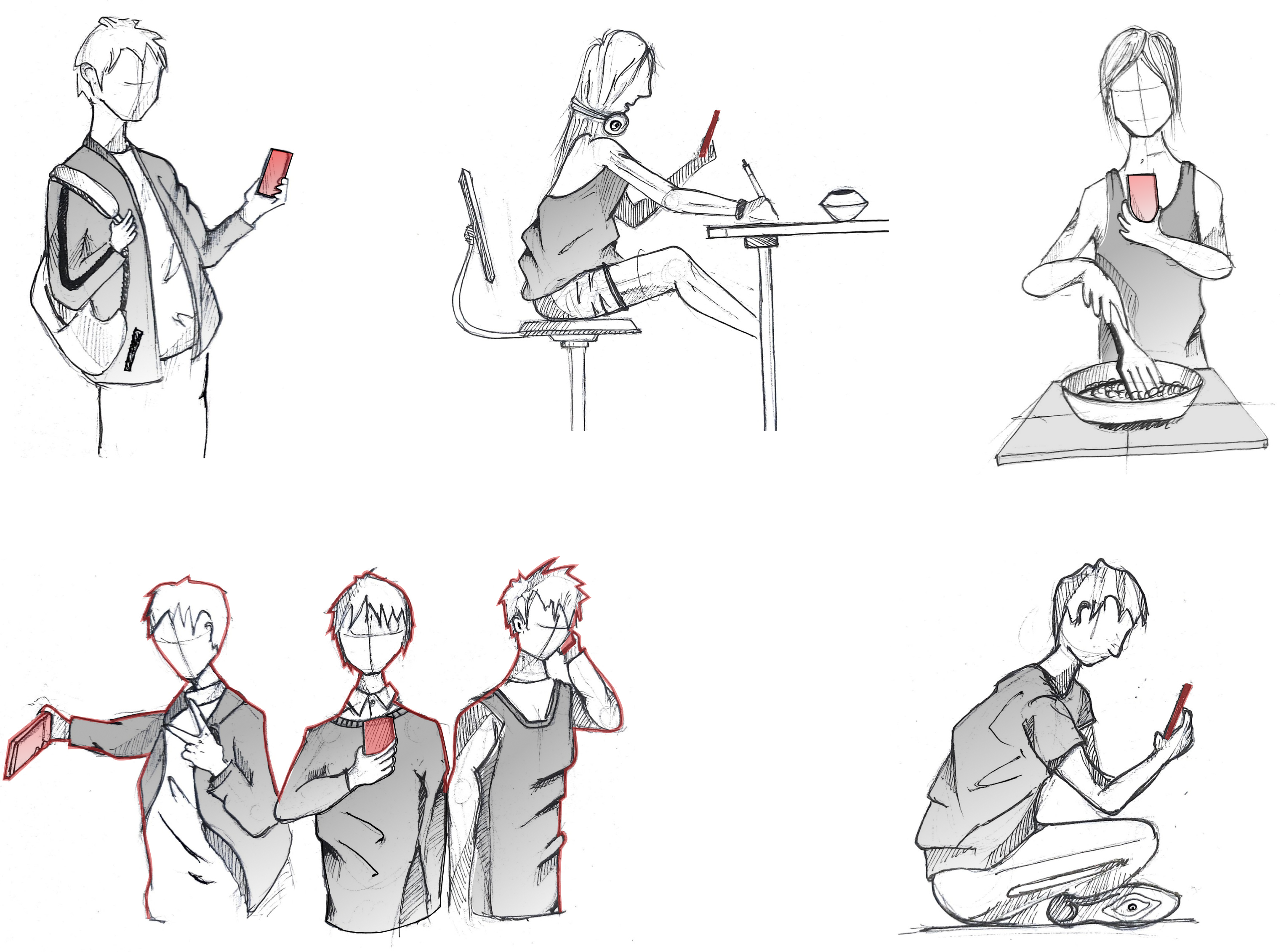
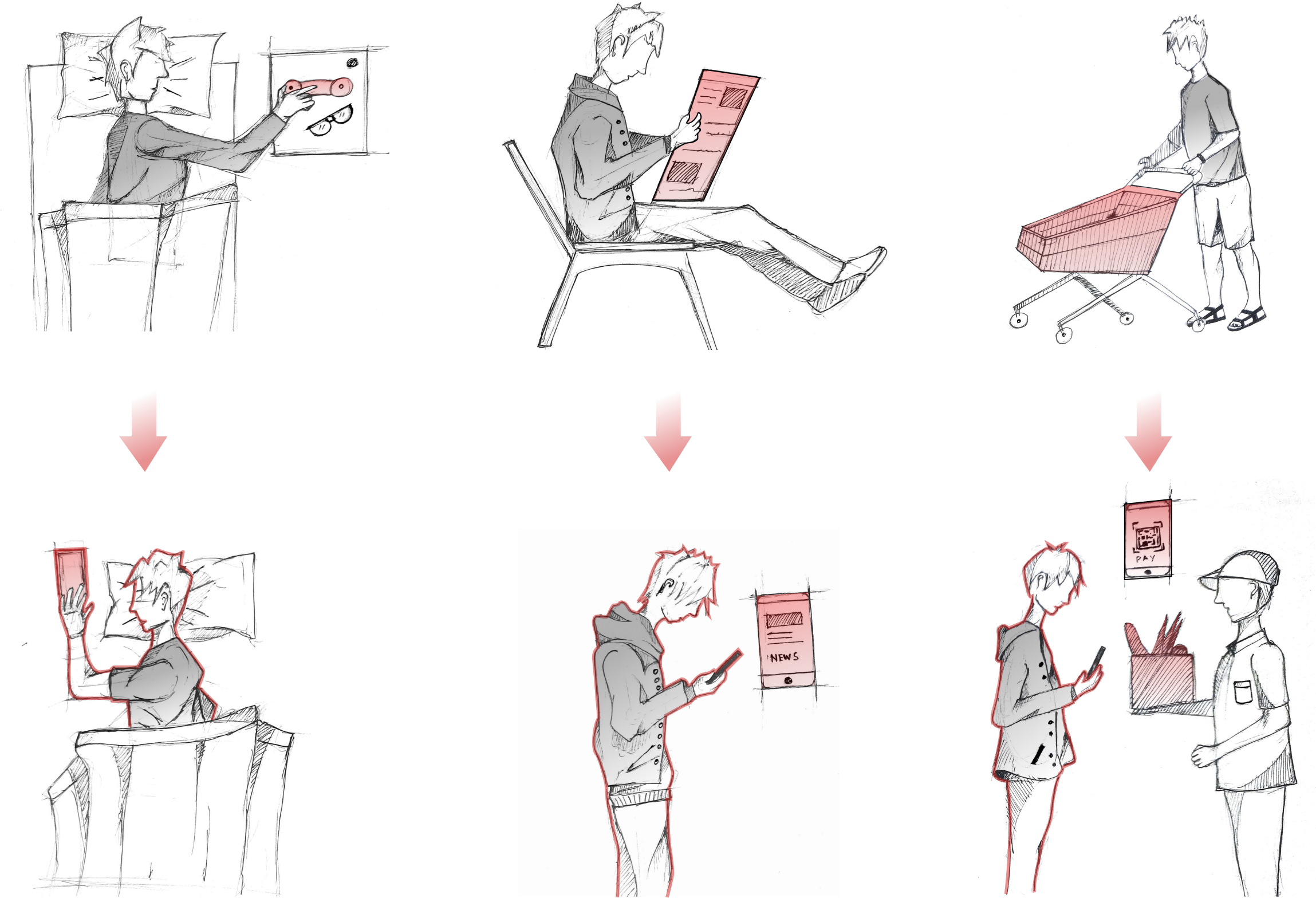
Everyday tasks now done with a tap on a phone
Chapter 01 · The Internet

It’s all started with the Magic that we created

The magic I call the Internet. Want food, a haircut, or a bit of knowledge, from the day’s news to rocket science? You tap a screen and it’s all there. Is that not magic?

And it’s a magic trick everyone knows. As of January 2021, there were over 5.1 billion active internet users worldwide.

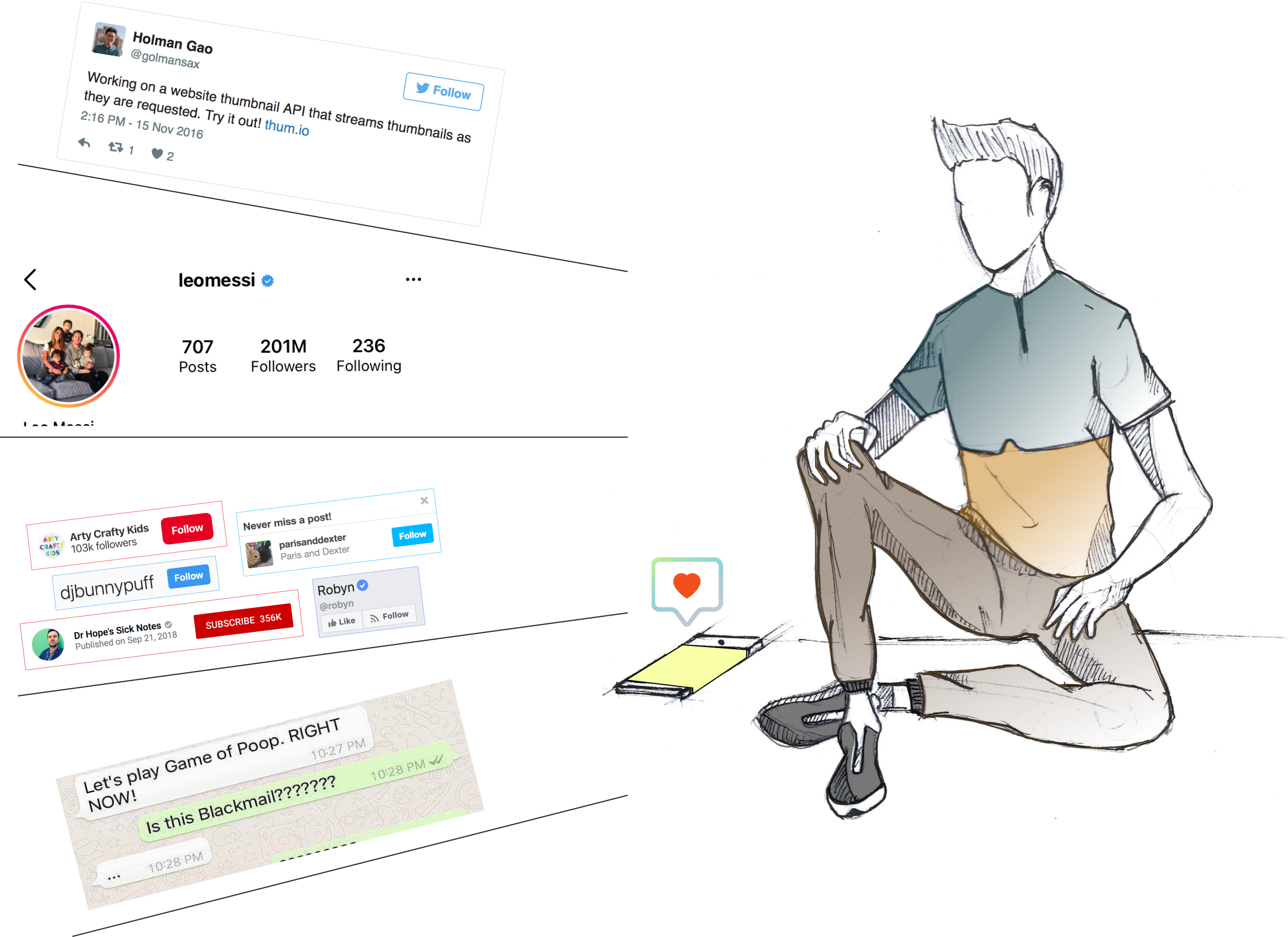
Phone addiction and the pull of notifications
Chapter 02 · Addiction

Every addiction is an escape, a reach for a need that isn’t being met

Something makes life easy, makes you feel like a magician, and you get addicted. Even when you try to escape, it pulls you back with something new you can’t resist.

Every beep is a hit of dopamine that makes you seek more. People touch their phones about 2,617 times a day, heavy users up to 5,427.

Belief and sharing information online
Chapter 03 · Belief

Faith is to believe what you do not see; its reward is to see what you believe

The more time you spend with something, the more you believe it, until belief becomes a blind trust that can even shape your feelings.

When news goes viral, you share it to show you care and to join the trend. Yet we rarely know enough to justify most of what we believe.

The real cost

So what’s the Problem?

The internet leads to addiction, addiction leads to belief and manipulation, all as one connected system. Drop misinformation into that system and it can look harmless, until it goes viral.

One connected system

Internet, addiction, and belief feed one another as a single loop, each amplifying the next.

Harmless, until it spreads

A single piece of misinformation looks like no big deal, right up until it starts to travel.

Manipulates millions

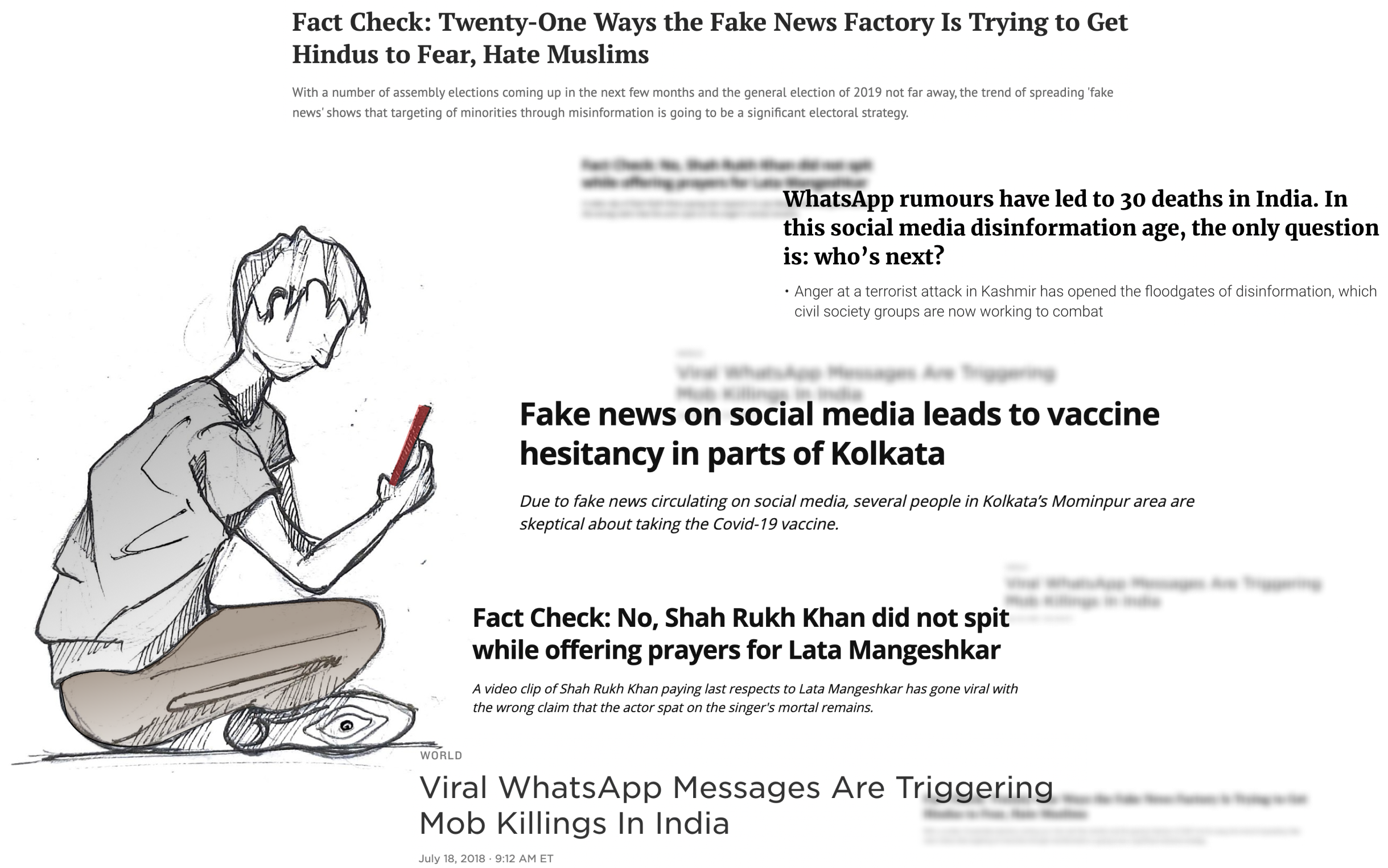
Once it goes viral, it influences and manipulates millions of people across the globe.

Fuels communal tension

It creates friction and can harm social groups, organisations, and even whole countries.

A weapon against democracy

It can be used to polarise communities and upset the democratic process itself.

Erodes trust and security

It chips away at people’s internal security and the shared beliefs that hold them together.

How misinformation spreads through the system and manipulates people

We saw it play out through the pandemic, in misinformation about vaccines and the disease itself.

01

What gives rise to misinformation?

  • Lack of regulation on news handles. There are no entry barriers for information on social media.
  • Communal polarisation. Society is largely split along ideological lines, which makes misinformation easy to spread.
  • Reach. As internet use grows, so does people’s reach, and the mobile phone became the catalyst.
  • Quick gain. Misinformation is advertised for money.
02

How people respond to misinformation

  • Rebuttal. Collecting facts to confirm the information isn’t fake.
  • Removal. Taking down misinformation by reporting it.
  • Educating others. Presenting facts so people can see the truth for themselves.
03

Challenges in fighting misinformation

  • The misinformation factory. You might rebut one fake instance, but the machine keeps churning out similar stories to push its narrative.
  • People rarely verify. Studies show most people never check misinformation; they reach for the evidence they already believe is right.
  • Lazy thinking. We are, by default, lazy thinkers.
My Understanding

We need a solution that breaks the chain of forwarding and sharing wrong information, one that is built by the user and for the user.

My Intent

Turning understanding into a solution

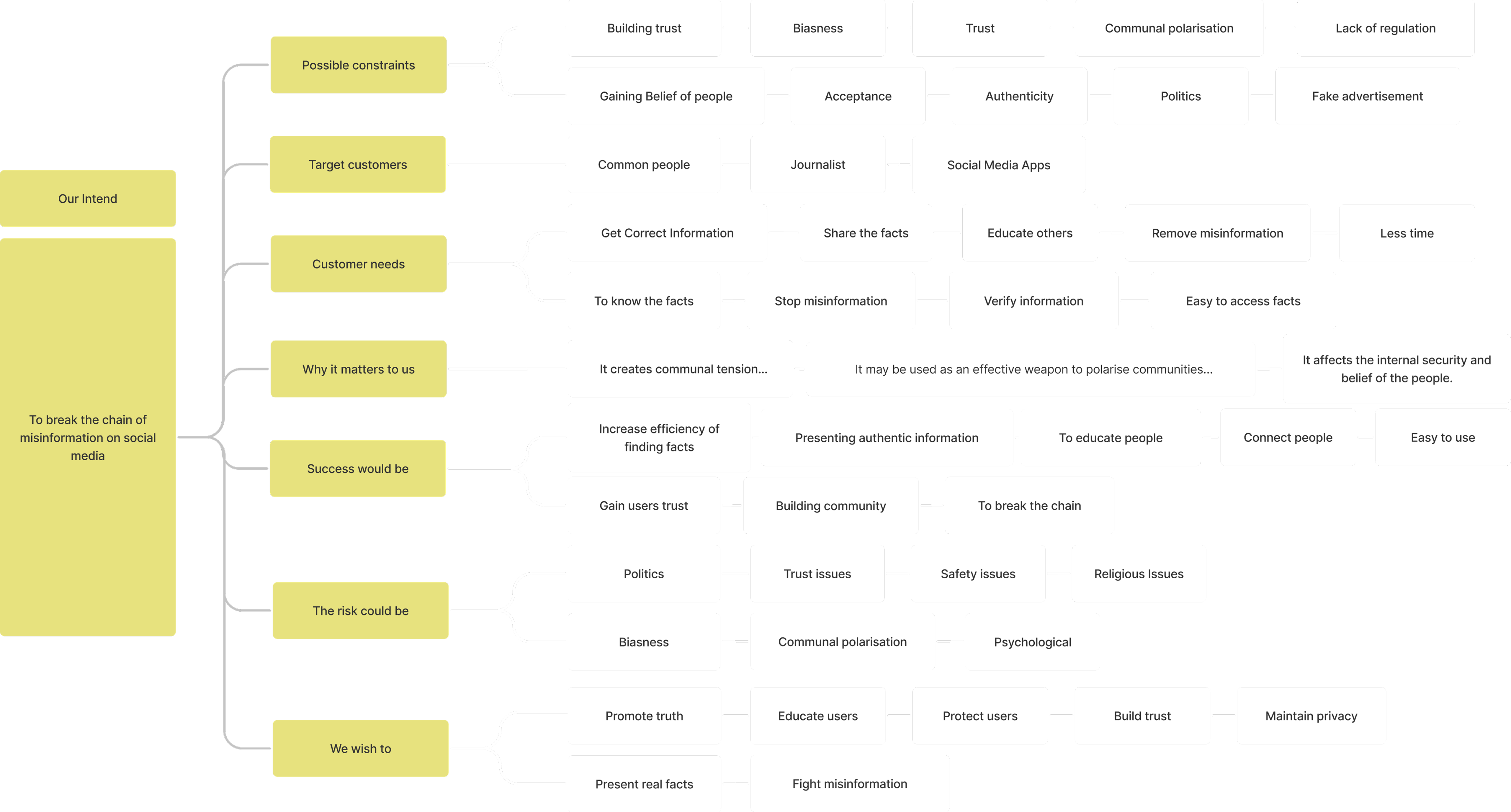
A user-led way to break the chain: helping people pause, check, and think before they share, so wrong information stops with them.

The intent: a user-led approach to stop misinformation before it spreads
Primary research

Stakeholders mapping & inter relationships

Stakeholder map: the primary, secondary, and supporting stakeholders and the support relationships between them

User survey

With the stakeholders and their relationships mapped, I ran a user survey. The questionnaire was shaped directly by the insights and observations gathered during secondary research.

Sample size27 Age21–30 years Questions15

User survey insights

What the responses revealed about how people come across, judge, and share information online.

Come across misinformation on social media platforms.0%
See misinformation on social media as a big problem.0%
Learn about trending news and information from social media.0%
Try to fact-check the information or news they see.0%
Like to share posts on social media.0%

Reading between the numbers, a few clear patterns emerged.

  1. 1

    Users are highly active on their phones every day.

  2. 2

    Instagram and WhatsApp are the platforms they use most.

  3. 3

    Most users aren’t very interested in checking facts.

  4. 4

    When they do verify, they lean on Google searches and trusted journalists.

  5. 5

    What holds them back: it’s time-consuming, the internet is full of misleading information, and existing biases get in the way.

  6. 6

    Many still want to collect facts and educate others by reporting misinformation.

  7. 7

    They think misinformation spreads fast because people find it interesting, trust the majority without checking, and because of fake advertising on social media.

User interview

To go beyond the numbers, I sat down with users one on one. First, the process I followed to plan, run, and make sense of these conversations.

How I ran the interviews

Four ways I spoke with users, one on one.

In person

Sitting down face to face for the richest, most natural conversations.

Phone call

Quick voice calls for people who preferred to talk without a camera.

Video call

Meeting online, reading expressions and reactions from anywhere.

Screen share

Watching users navigate live, seeing exactly where they paused or got stuck.

Interview personas

01

The design student

Characteristics
  • College student
  • Design student
  • Uses Instagram & WhatsApp
Challenges
  • Gets manipulated by misinformation
  • Doesn’t know whom to believe
  • Too lazy to check facts
Needs
  • A trusted platform
  • Relevant information
  • A single source
  • To be able to educate others
02

The merchandiser

Characteristics
  • Merchandiser
  • Working in industry
  • Uses Instagram, Twitter & WhatsApp
Challenges
  • Too many sources available
  • No way to react to misinformation
  • No trusted platform
Needs
  • To be able to help others
  • To be able to share the truth
  • Low effort to spot misinformation
03

The influencer

Characteristics
  • Influencer
  • Blogger
  • Uses YouTube & Instagram
Challenges
  • Hard to convey the truth to others
  • Fact-checking takes time
  • Facts often lack authenticity
Needs
  • To save time
  • Authentic sources
  • Trustable information
  • One-touch facts

Flow model for contextual inquiry

What happens when a user meets misinformation while scrolling, and the two paths they take from there.

User flow · Misinformation
2 paths · 1 decision
›
TRIGGERIdle scroll
ENCOUNTERMisinformation
RESPONSEVerify or let go
METHODContextual inquiry

Sequence model for contextual inquiry

The step-by-step journey a user takes when they meet information online, from the first idle scroll to the moment they decide what to do with it.

Sequence · Contextual inquiry
10 steps · 3 outcomes
01Open social mediaTrigger
02Scroll the feed
03Glance at posts
04An interesting post
05Keep scrolling
06Shared by many
07Someone you know
08It is trending
09Another platform
10Same post againDecision
Then, one of three Check the facts Let it go
›
StartIdle boredom
SignalSeen repeatedly
Tipping pointIt is trending
OutcomeShare, check or let go
04 Insights

From noise to a direction

01 · Key insights

Surveys and interviews kept pointing to the same gap: people know misinformation is everywhere, but the moment they meet it, checking feels too slow and too uncertain to bother. Four insights shaped the direction.

Insight 01

Nearly everyone is exposed, almost no one acts. 96% come across misinformation and 82% call it a big problem, yet only 67% ever try to verify. Awareness is not the issue, effort is.

Insight 02

Verification loses the race against speed. A post spreads in seconds, but checking it means digging through too many scattered, low-trust sources, so people fall back on the belief they already hold.

Insight 03

People want to help, not just stay safe. Across personas, users didn't only want to protect themselves, they wanted to collect facts and educate others. The design has to let them act on the truth, not just spot a lie.

Insight 04

Trust is the real currency. With no single credible source, a verdict only lands if it feels authentic and neutral, and if getting it is low-effort and close to one-touch.

02 · Who we’re designing for

Before shaping any solution, we pinned down exactly who Facts is for: an everyday, well-meaning sharer who moves fast and trusts their feed. These three lenses, the segment, an empathy map, and a journey map, turn that person from an abstraction into someone we can design around.

Defining the user segment

Across the survey and interviews, one group stood out: young, mobile-native users, ages 21 to 30, who run into misinformation daily. They show up in two roles. Hover a card to meet each one.

The scroller · 21–30
Content consumer

Opens the feed out of boredom and gets the news from it. 96% run into misinformation, yet only 67% ever try to verify before they react or reshare.

Lives on
InstagramWhatsApp
Behaviour
Scrolls fast, reshares before checking
Motivation
Wants to be right, not misled
Frustrations
No time, no source they trust
The amplifier · 21–30
Content creator

Posts and builds an audience, so what they share travels far. One wrong post does real damage, yet fact-checking takes time and facts often lack authenticity.

Lives on
InstagramYouTubeTwitter
Behaviour
Posts often, holds an audience
Motivation
Protect credibility, help followers
Frustrations
Slow to check, facts feel unauthentic

Together they sit at the busiest point of the problem: consumers spread misinformation without meaning to, while creators can amplify it, or help stop it. Win their trust and accuracy catches up with sharing.

Empathy map

One combined view of the segment, the consumer who scrolls and the creator who amplifies, at the moment they meet a questionable post.

Says

“I don’t have time to check every post.” “I’m not sure which source to trust.” “If everyone’s sharing it, it’s probably true.”

Thinks

Wants to be right, not misled. Quietly worries that one wrong share could dent their credibility, yet assumes the majority view is the safe one.

Does

Scrolls fast and gets the news from the feed. Reshares, and posts, before verifying. Rarely stops to check the facts.

Feels

Curious but rushed, unsure who to believe, and a little anxious about spreading something false, while still wanting to help others see the truth.

Journey map

Following the user through one real moment: while scrolling, they meet an interesting post that seems to be going viral, and set out to learn whether it is actually true.

Expectation

To know the facts of the post they saw without losing much time searching different sources on the internet, and without getting confused.

1
See
🙂

Curious

Scrolling his social media account, he sees a viral post. Even some of his friends are sharing the same post.

This post is interesting 😀
Something new, why is everyone sharing it? 🙂
I think it is going viral 😃
2
Think
🤔

Doubtful

He doubts the information in that post and starts thinking it might be misinformation spreading all around.

Is it true? 🙂
It might be wrong 😐
3
Search
😕

Overwhelmed

He searches for facts about the post from different sources, and ends up sifting through a lot of data on the internet.

Too many sources, which to trust? 😕
It is taking too much time 😟
Lots of misleading information online 😠
4
Compare
😣

Confused

Confused by the data he has, he compares it against trusted news channels to work out the real fact.

Bias in the information present 😕
It is taking time 😟
5
Share
😰

Anxious

Having reached a conclusion, he wants to share that fact with other users so they know the truth.

What to write on the post? 😖
Where to share it? 😕
Will people trust my post? 😟

03 · Design statement

Everything converged into one statement, the Why, Who, and How, that anchored the rest of the project.

Design statement

For people who share and shape opinion on social media, Facts is a digital platform that makes verifying any claim, whether image, text, or video, quick and effortless before it is shared. Anyone can request a check or tap into information already verified by AI after comparing many articles, keeping the facts open for all.

05 The Solution

Key screens & flows

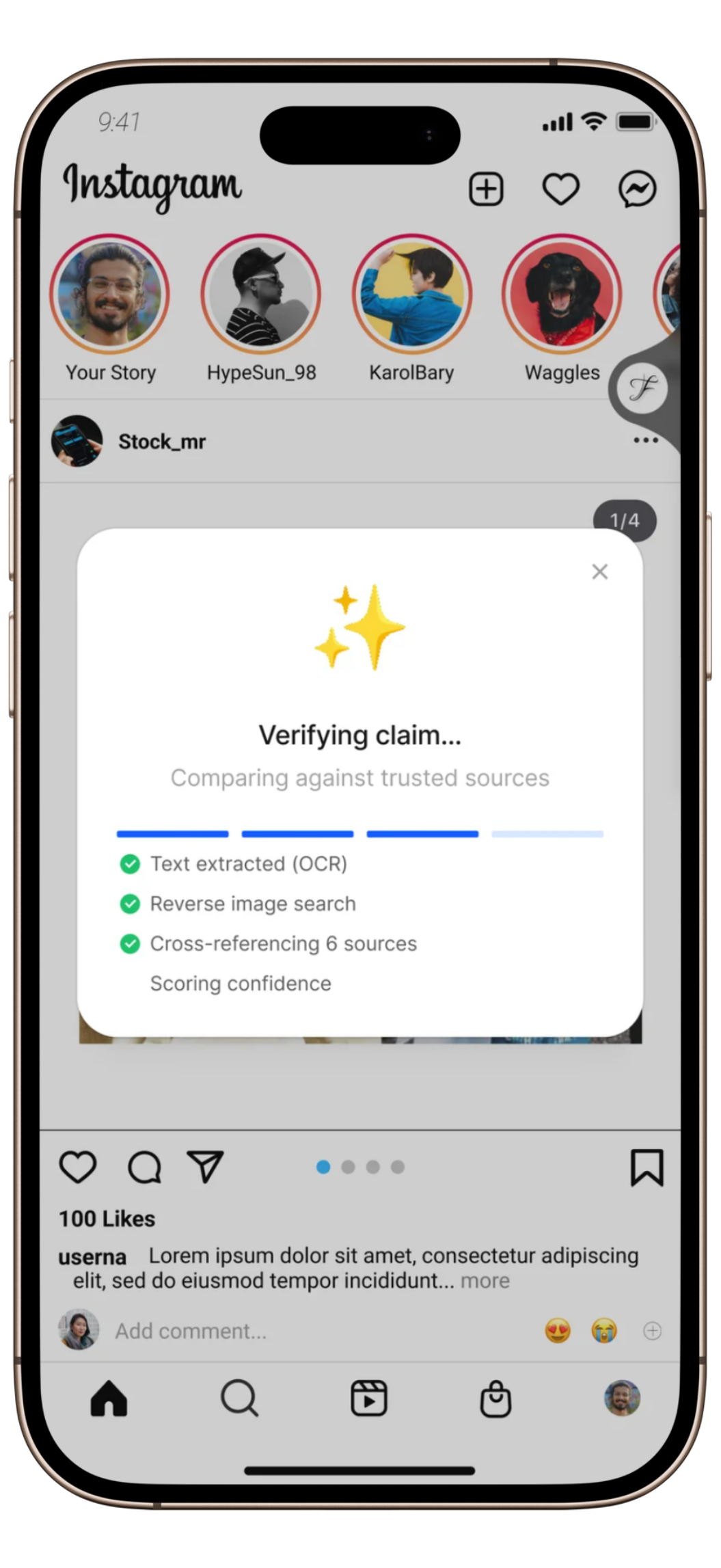
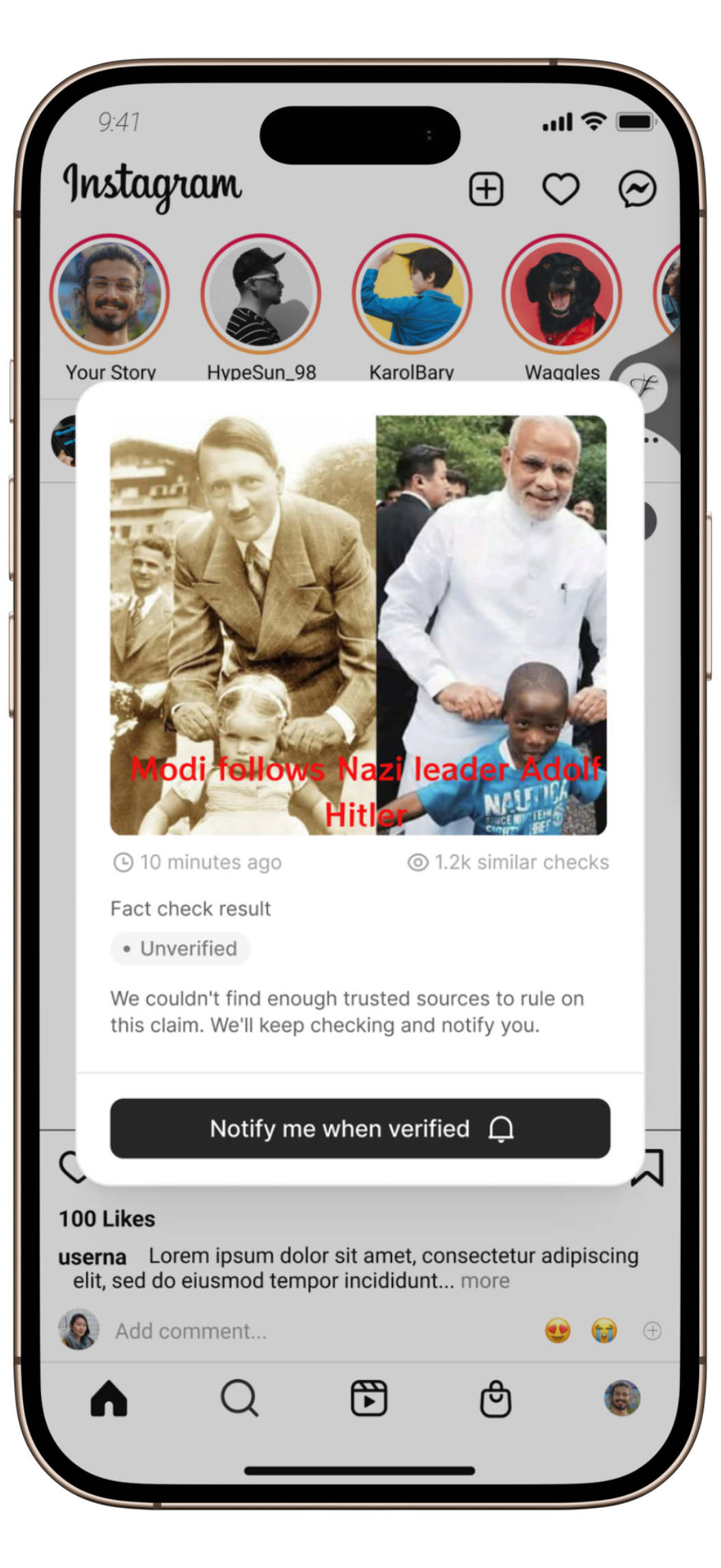
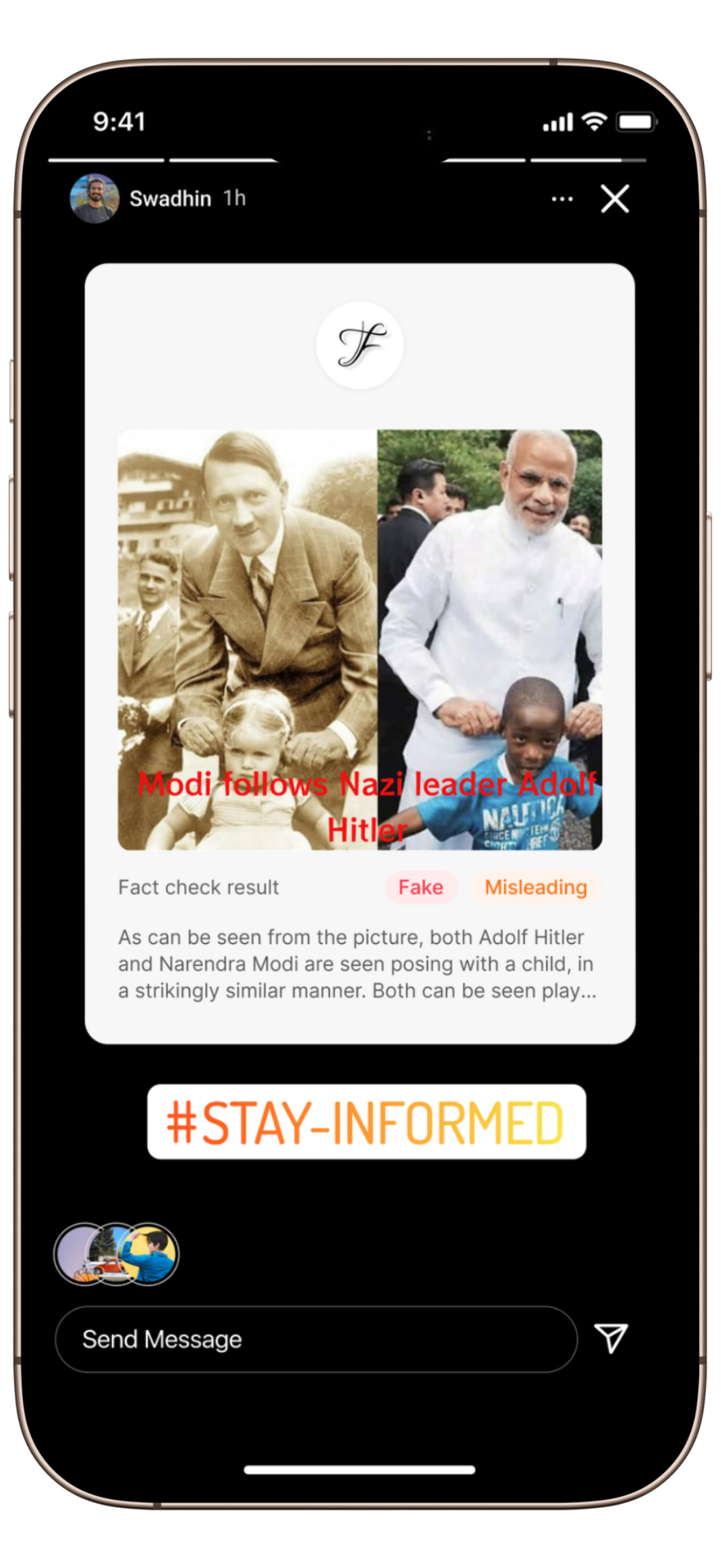
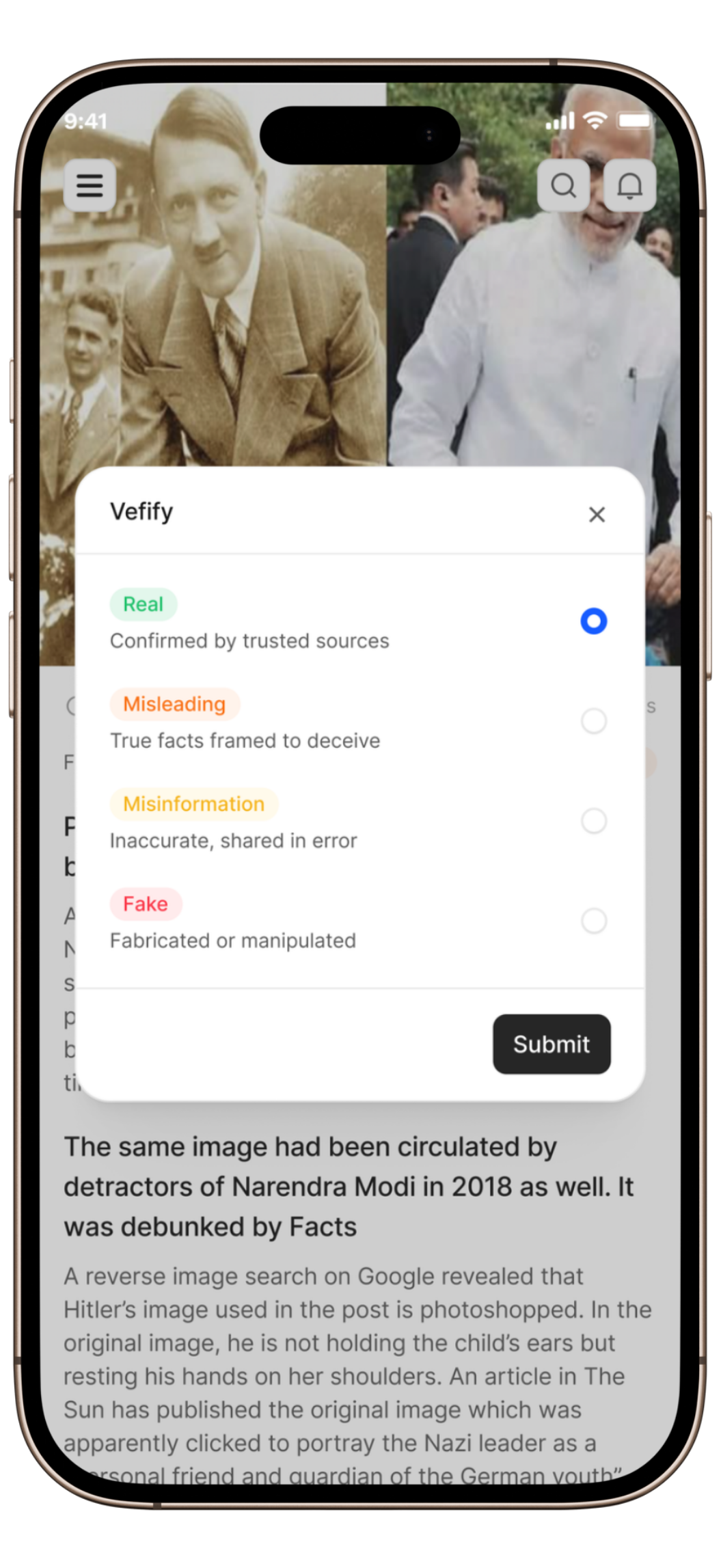
The core loop of Facts: spot a doubtful post, let AI verify it against many sources, and share the truth back, all in a few taps.

01

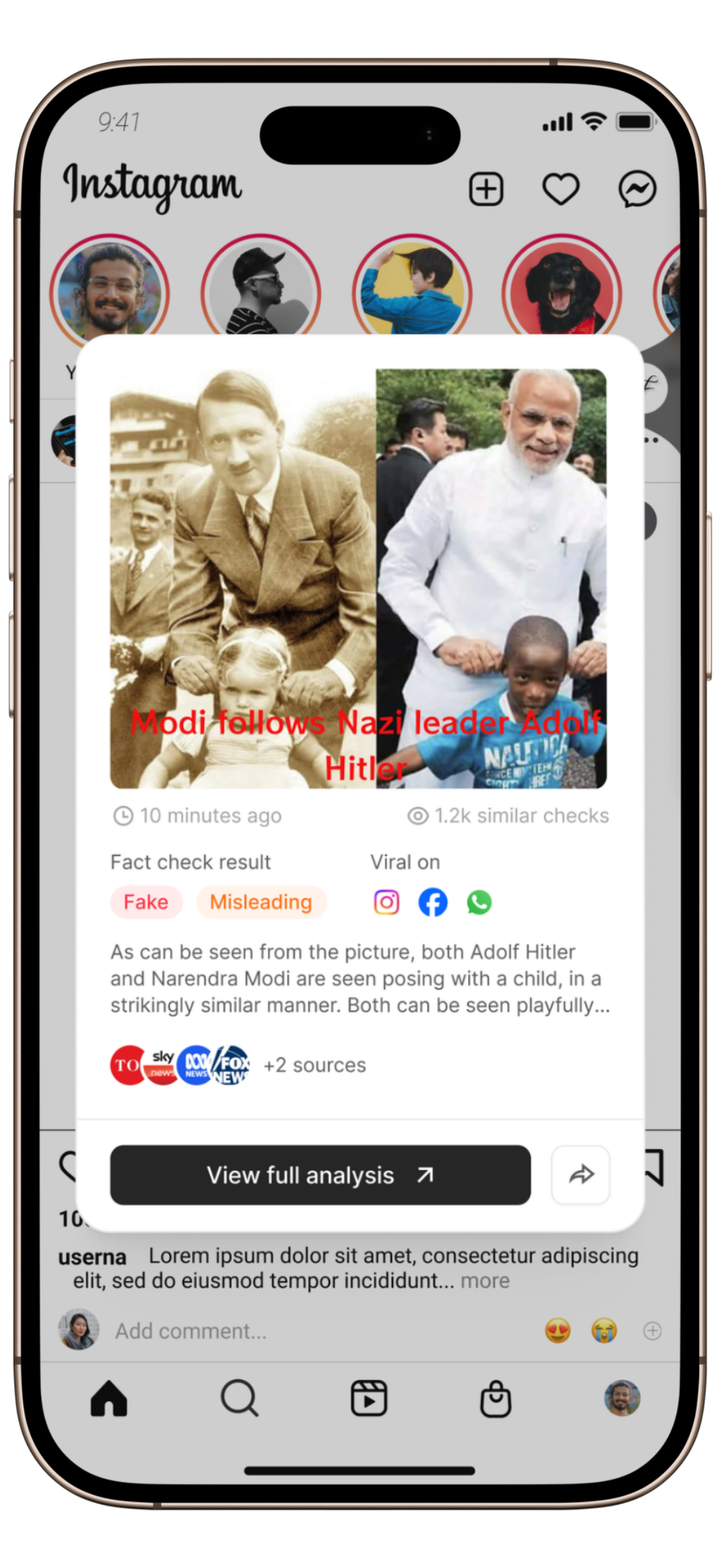
Verify a post in a tap

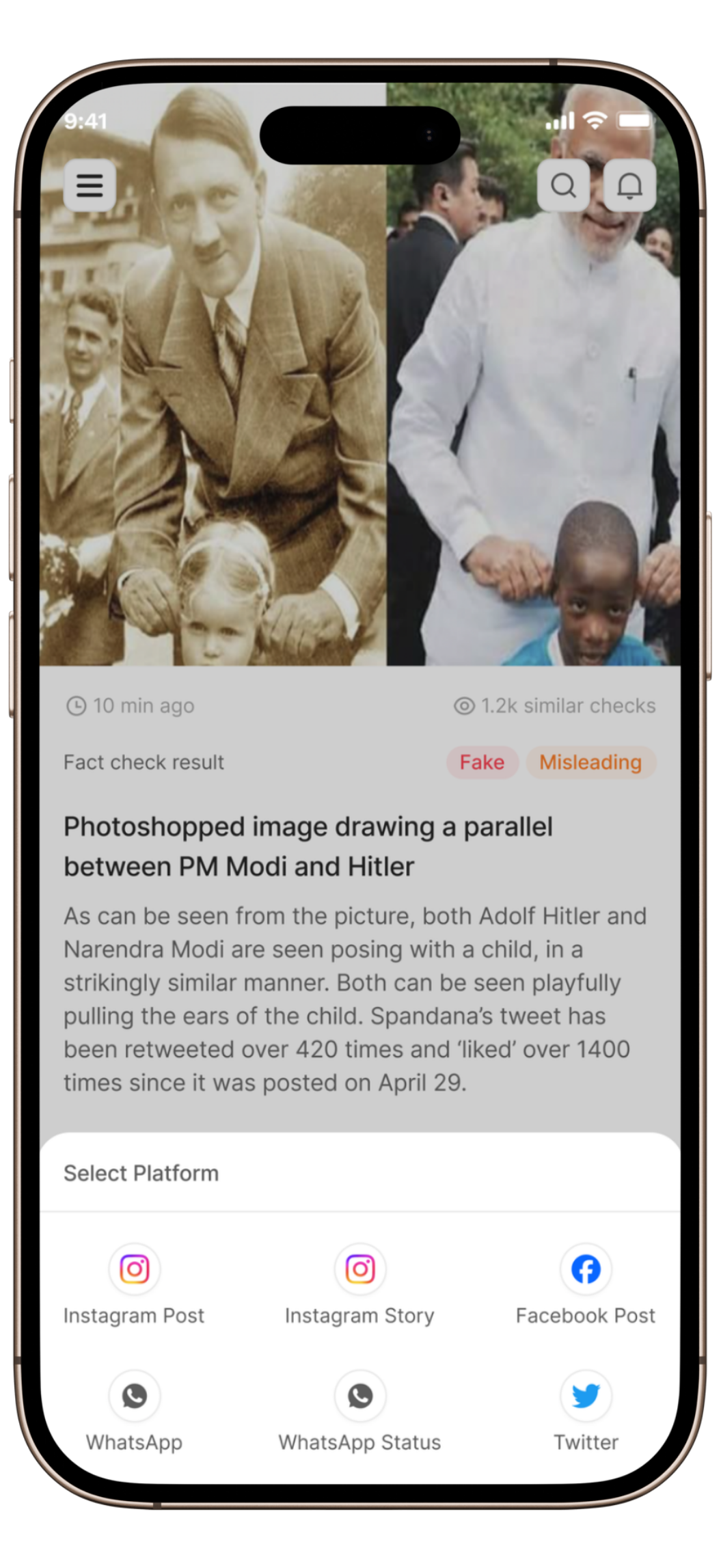
  • Most people are too lazy to verify what they see, so checking has to feel effortless.
  • A Facts popover lets users scan information directly from any social media, just by clicking on it.
  • AI verifies it in seconds and shows the result then and there.
02

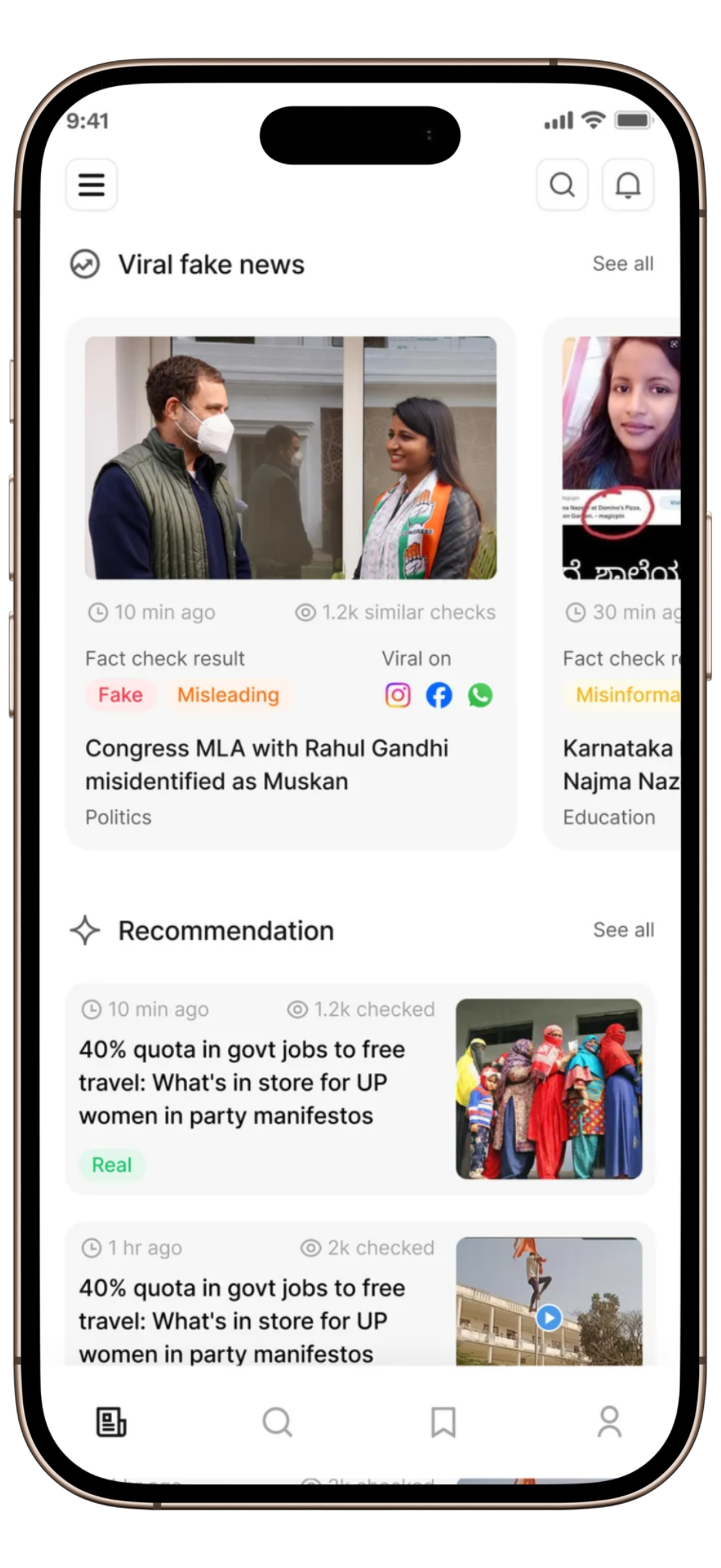
Let AI check the facts

  • Facts scans and compares many articles and sources.
  • Get a clear verdict with the evidence behind it.
  • See how trustworthy a claim is without digging through dozens of tabs.
03

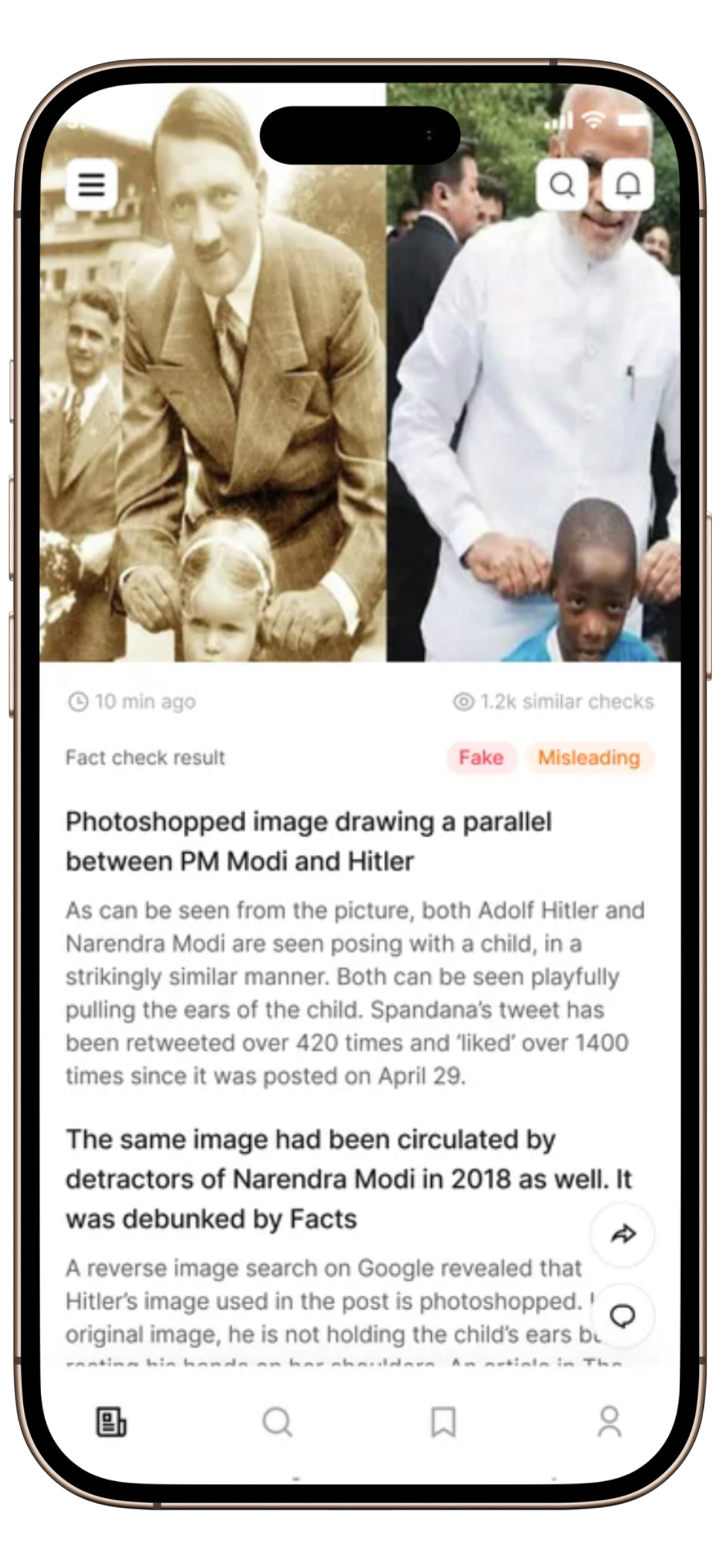
Share the truth in one tap

  • Turn the verified result into a ready-to-post card.
  • Share it back to your feed or with friends.
  • Help others see the facts, keeping them open for all.
A closer look

The app, screen by screen

Facts app screen
Facts app screen
Facts app screen
Facts app screen
Facts app screen
Facts app screen
Facts app screen
Facts app screen
Facts app screen
06 Reflection

What I learned

The research kept saying the same thing: people are not malicious, they are just moving fast. 96% run into misinformation but only 67% ever check, because verifying feels slow and effortful. That reframed the whole brief. The job was not to block or shame anyone at the point of sharing, it was to slip a lightweight pause into a habit they already have. A one-tap popover that scans a post in place respects how little time and patience people have, and that is exactly what makes it likely to get used.

People told me plainly that they do not know which source to believe and that facts often do not feel authentic. So a verdict on its own was never going to be enough. The design had to carry its own credibility: show what the AI compared, surface the evidence behind a result, and let people see how a conclusion was reached rather than just asserting it. Designing for trust changed small decisions everywhere, from how a result is worded to how its sources are shown.

Existing fact-checks read like lectures, and the people I spoke to switched off the moment they felt judged. Keeping the voice calm, neutral and non-judgemental turned out to matter as much as speed or accuracy. When the product feels like a helpful companion rather than a scold, people are far more willing to slow down, check, and even pass the correction on. Tone is not decoration, it is what keeps the door open.